|
The historic city of Plymouth sits between the mouths of two rivers, the Plym and the Tamar. (map) The Tamar divides the county of Devon from Cornwall. The two counties are linked only by bridges and ferries for more than forty miles of the length of the river. During World War II, Plymouth suffered proportionally as much damage as any city in Britain and pro-rata as many civilian casualties as London. A great part of the ships and troops who participated in the Normandy Landings of 1944 sailed from Plymouth to liberate Europe. Over the last 500 years, life in Plymouth has very much been dominated by war. There were Breton raids on the port in the early fifteenth century, hence Bretonside. 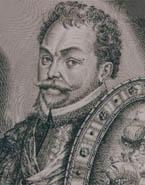 In
Elizabethan times Sir Francis Drake famously played bowls on Plymouth
Hoe as he waited for the Spanish Armada in 1588. In
Elizabethan times Sir Francis Drake famously played bowls on Plymouth
Hoe as he waited for the Spanish Armada in 1588.In the English Civil War Plymouth was the only Roundhead stronghold to successfully hold out against the King. The huge Royal Dockyard was built in the late Seventeenth Century and has been a major employer in the city ever since. The Royal Citadel on the Hoe has been in continuous military occupation since the late 1660s. Other important buildings include the Royal Naval Hospital, built in the 1760s, the Military Hospital, built in 1797, the Royal Marine Barracks and the Royal William Victualling Yard. This is the area from which many of Britain's great seafaring stories have had their birth. Sir Francis Drake started and finished his historic circumnavigation of the world in Plymouth Sound. He was also a major property owner in the area and pioneered the first municipal water supply in the country. The Pilgrim Fathers eventually set out for the new world from here on The Mayflower . Captain James Cook sailed from Plymouth on each of his three voyages of discovery. So too did Charles Darwin on the Beagle, and, of course, the first person to solo circumnavigate the globe - Sir Francis Chichester. In 1919 Nancy Astor became MP for Plymouth Sutton and the first woman to take her seat in the House of Commons. From that day to this Plymouth has seldom been without a female MP. A good friend of Nancy Astor and her husband Lord Waldorf Astor was Aircraftsman Shaw - more famously known as Lawrence of Arabia - who came to RAF Mountbatten as a virtual recluse in 1929. Recently opened in 2002 is the Plymouth Mayflower Visitor Center, which records Plymouth's greatest maritime adventures through the latest technology. |
