|
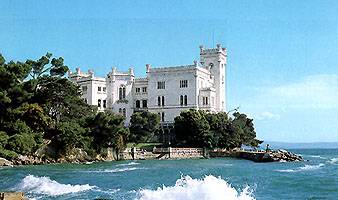 The “love-nest” of Maximilian of Habsburg (1832-1867)
and
Charlotte of Saxony (the daughter of the King of
Belgium), Miramare Castle was built from 1856 to 1860 to a
design by Carl Junker on the orders of Archduke Maximilian. The “love-nest” of Maximilian of Habsburg (1832-1867)
and
Charlotte of Saxony (the daughter of the King of
Belgium), Miramare Castle was built from 1856 to 1860 to a
design by Carl Junker on the orders of Archduke Maximilian. 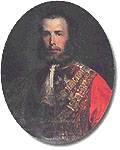
The royal couple, who then divided their time between the duties of the
court and their private lives but were soon to accept the benefits and
burdens of the Mexican crown (as Emperor of Mexico), spent a happy period here.
It was here, with
the visit of a delegation from Mexico, that definite plans were laid for the
adventure that led to their undoing, a fate so tragic that a veil of
romantic sadness was drawn over the Castle itself. 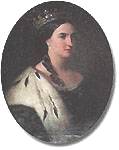
Later the residence of Duke Amadeo of Aosta and from 1943 to 1954 the
headquarters of foreign military units, the Castle is now a museum run by
the Cultural Heritage Office. Its rooms are open to the public. All
the rooms still feature the original furnishings, ornaments, furniture and
objects dating back to the middle of the 19th century. The Castle
gardens provide a setting of outstanding beauty with a variety of trees,
chosen by and planted on the orders of Maximilian, that today make a
remarkable collection. Features of particular attraction in the gardens
include two ponds, one noted for its swans and the other for lotus flowers,
the Castle annex (“Castelletto”), a nearby a bronze statue of
Maximilian, and a small chapel in which is kept a cross made from the
remains of the “Novara”, the flagship on which Maximilian, brother of
Emperor Franz Josef, set sail to become Emperor of Mexico. Today the gardens
play host to spectacles such as “Son et Lumière”, reliving the tragic
story of Maximilian and Charlotte in its natural setting, and concerts such
as the “Musical Walks” performed by the Opera Giocosa of Friuli-Venezia
Giulia.
|