 |
 Back
Back Trans-Alaska
Pipeline System

The Trans-Alaska
Pipeline System (TAPS), usually called the Alyeska
Pipeline in Alaska or the Alaska Pipeline elsewhere, is a
major
U.S. oil
pipeline connecting
oil
fields in northern
Alaska
to a sea port where the oil can be shipped to the
Lower
48 states for refining.
The main Trans-Alaska
Pipeline runs from north to south, almost 800 miles, from the Arctic
Ocean at Prudhoe Bay to the
Gulf of Alaska at
Valdez, passing near several Alaskan towns, including
Wiseman, Bettles,
Livengood,
Fox,
Fairbanks, and
Glennallen [see map].
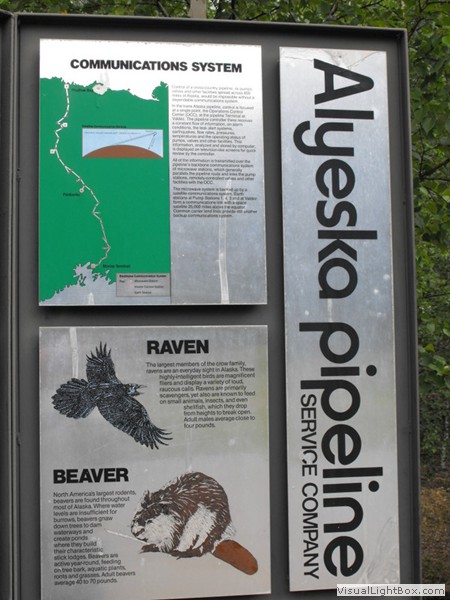 Informational sign by the pipeline
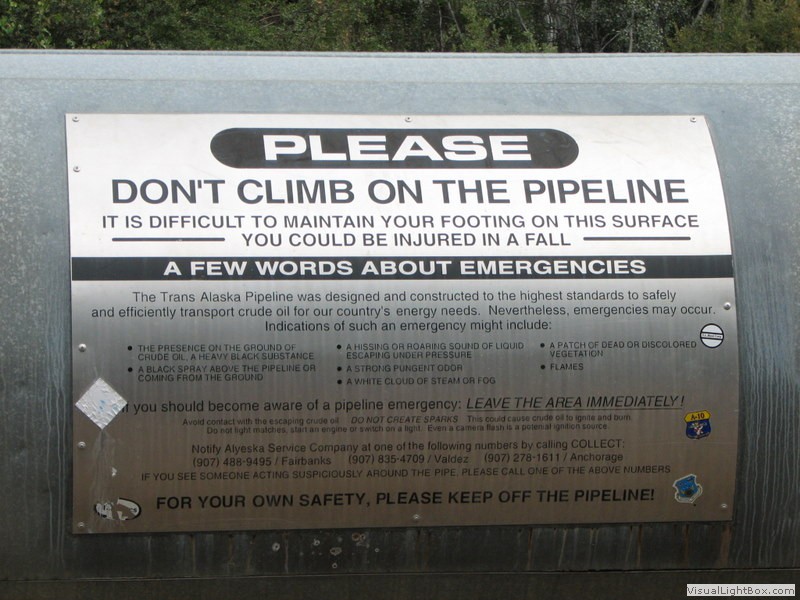 Warning sign
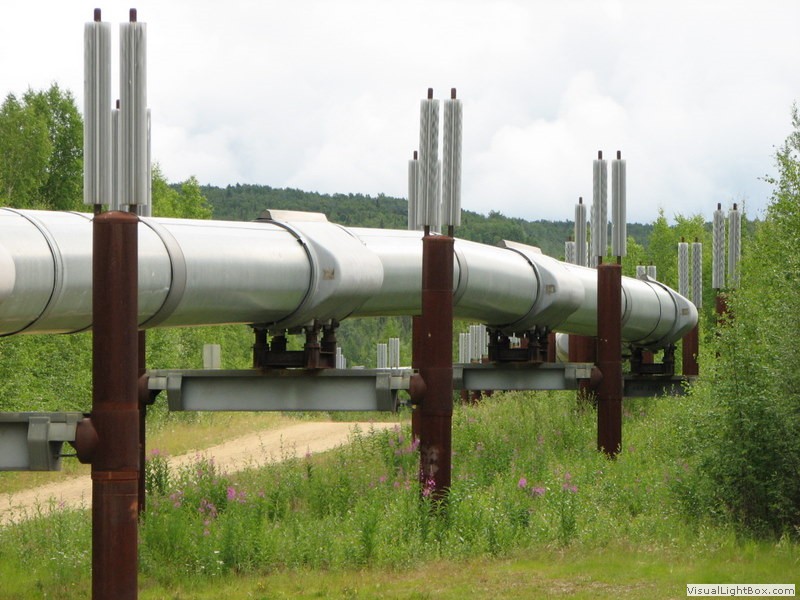 Alaska pipeline
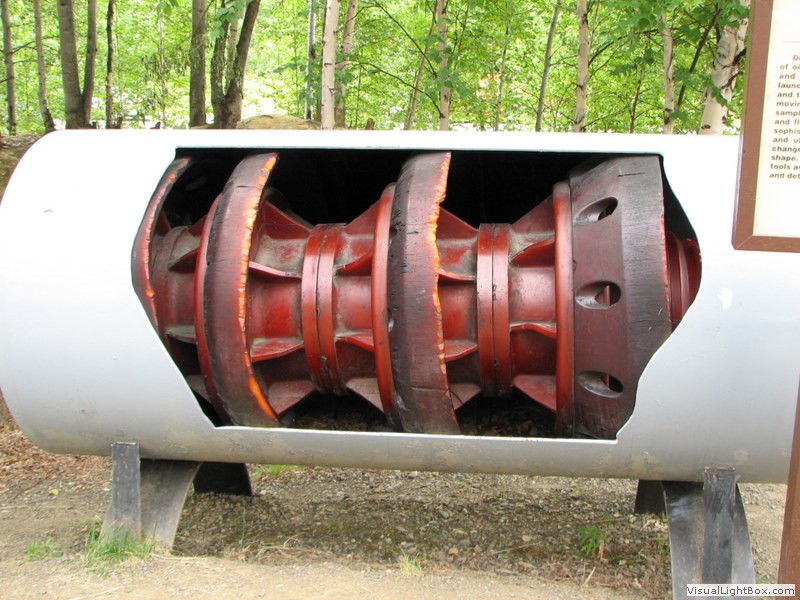 Mechanism to clean the inside
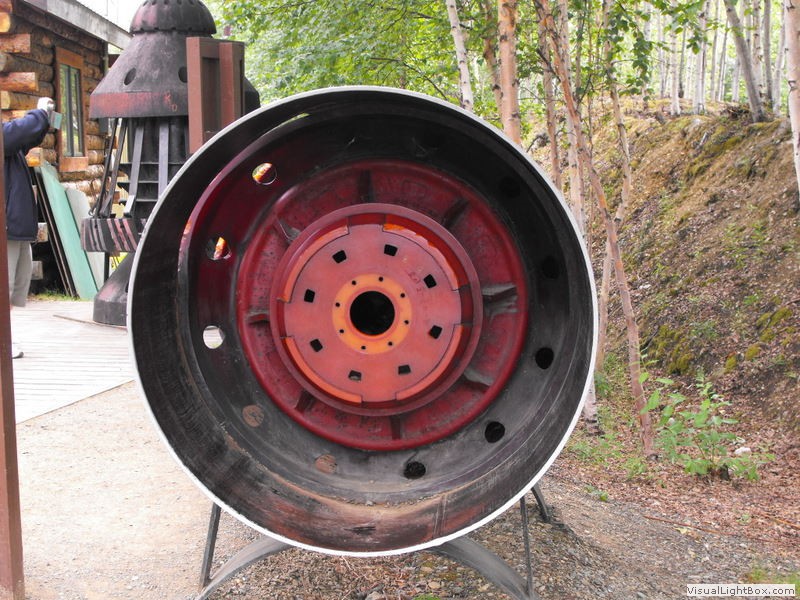 Another view on exhibit
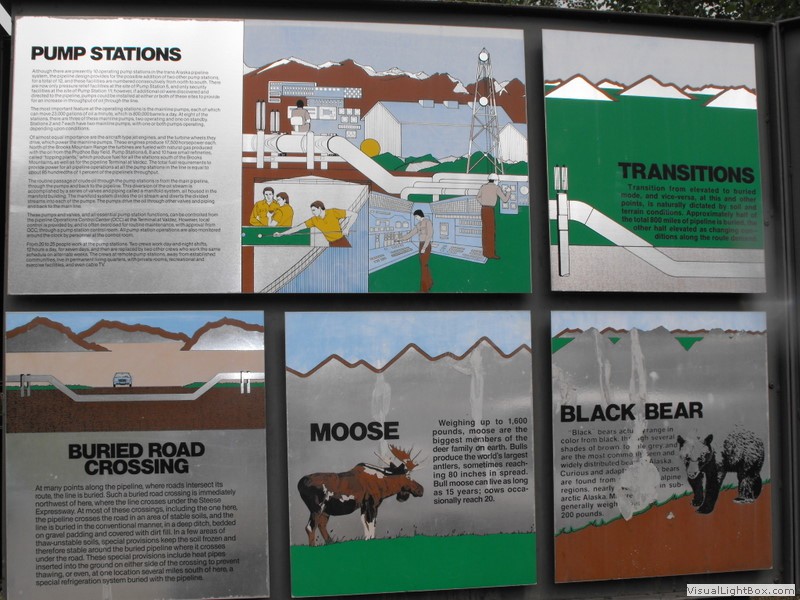 Informational sign by the pipeline
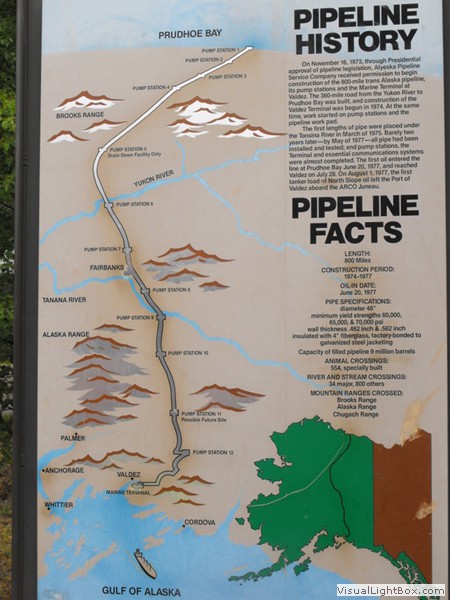 Informational sign by the pipeline
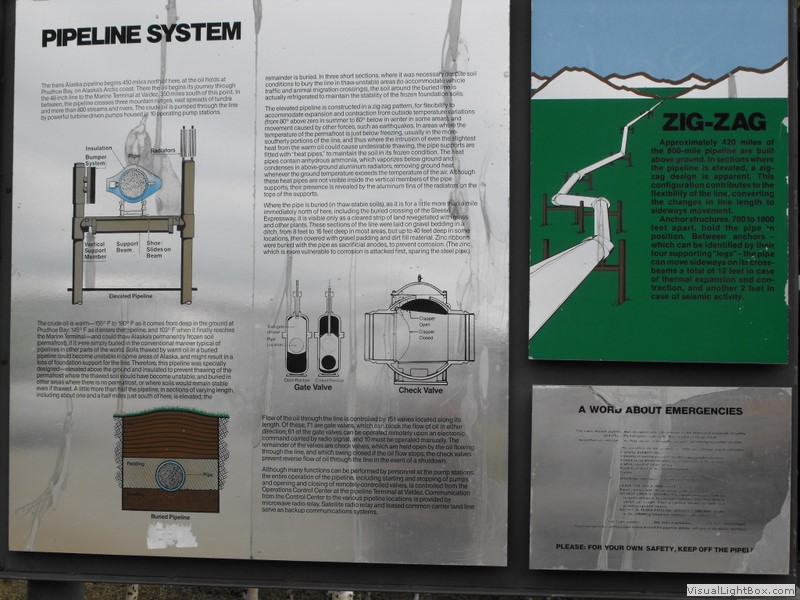 Informational sign by the pipeline
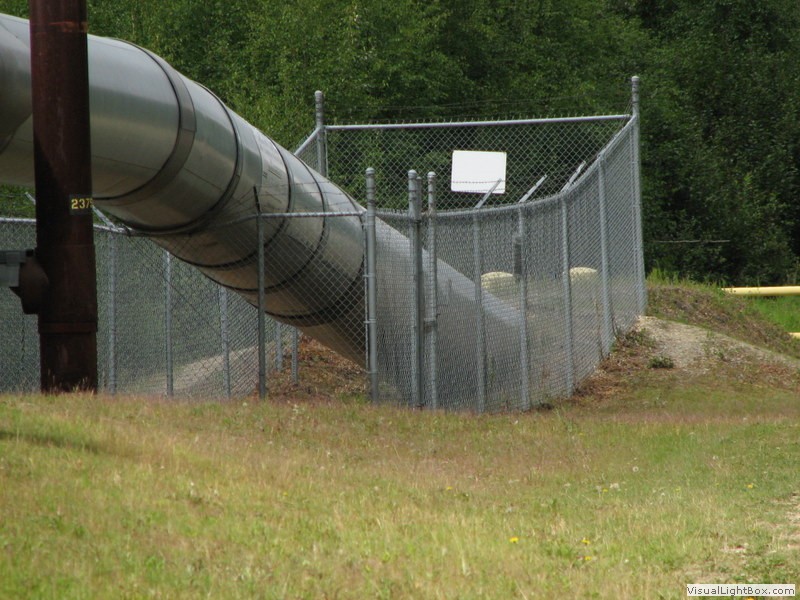 Alaska pipeline
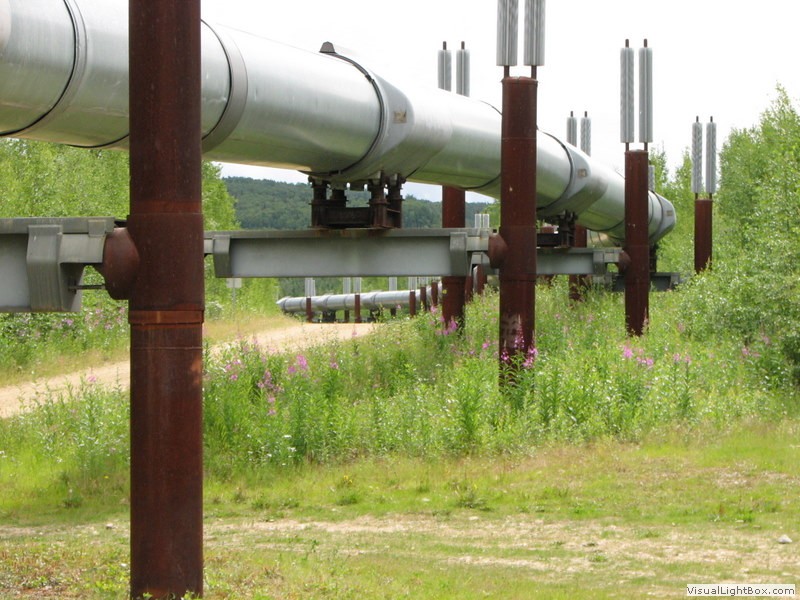 Alaska pipeline
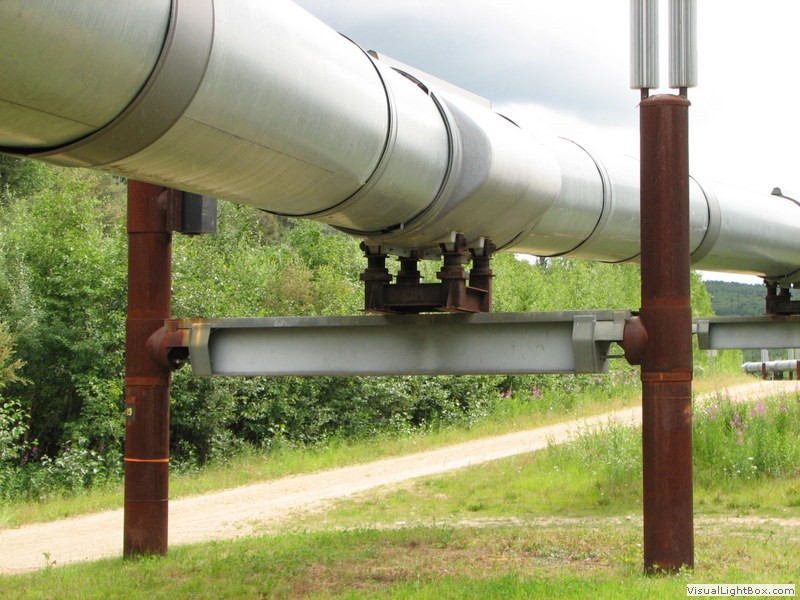 Alaska pipeline
 We were allowed to walk around and touch the pipeline
 We were allowed to walk around and touch the pipeline
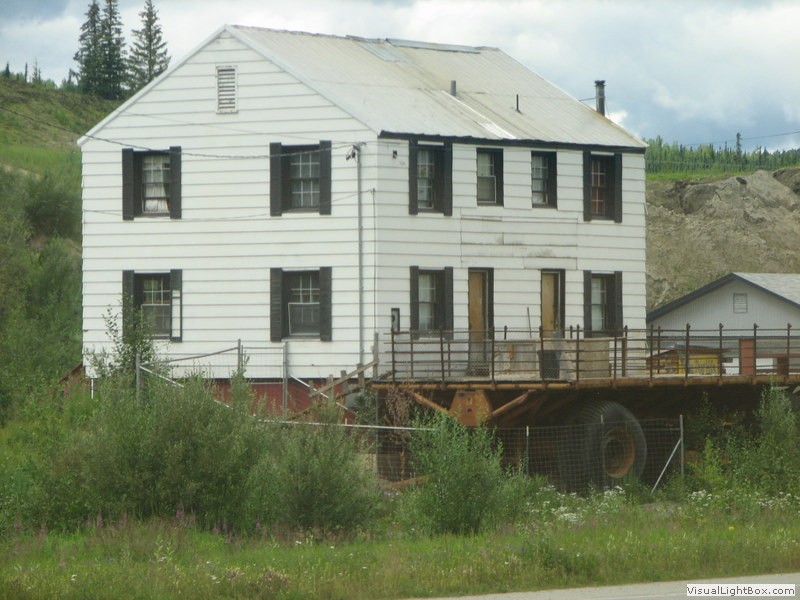 House moving - across the highway
lightbox gallery cmsby VisualLightBox.com v6.1
House moving - across the highway
lightbox gallery cmsby VisualLightBox.com v6.1
 Construction of the
pipeline presented significant challenges due to the remoteness of the
terrain and the harshness of the environment it had to pass through.
Between Arctic Alaska and
Construction of the
pipeline presented significant challenges due to the remoteness of the
terrain and the harshness of the environment it had to pass through.
Between Arctic Alaska and
Since its completion in
1977, the pipeline has transported over 15 billion
barrels of oil.
Construction
Oil was discovered at
Prudhoe Bay, Alaska in 1968, after explorers had been searching all
over
The oil companies with
exploration rights grouped together as the
Alyeska consortium to create a company to design, build, and then
operate the pipeline. US President
Richard Nixon signed the
Trans-Alaska Pipeline Authorization Act into law on
November 16,
1973, which
authorized the construction of the pipeline, Fmr. Sen.
Mike Gravel played a crucial role in bringing about the pipeline.
 The
pipeline crossing the
Tanana River
The
pipeline crossing the
Tanana River
The single 48
inch diameter pipeline was built between March
27, 1974
to May 31,
1977 at a
cost of around
US$8
billion. The pipe was constructed in six sections by five different
contractors employing 21,000 people at the peak of work; 31 were
killed in accidents during construction.
The 800 mile (1,286 km)
route presented special challenges. As well as the harsh environment,
the need to cross three mountain ranges and many rivers and streams, the
permafrost of
Technical details
 A
caribou
walks next to a section of the pipeline north of the
Brooks Range.
A
caribou
walks next to a section of the pipeline north of the
Brooks Range.
Along the pipeline
there are eleven
pump
stations, each with four pumps. Each electric pump is powered by
diesel
or
natural gas generators. Twelve pump stations were planned but Pump
Station 11 was never built, though the southward numbering system for
the pump stations retains a place for this nonexistent station. Usually
only around seven stations are active at one time, and future plans to
replace the existing pumps with newer high-efficiency pumps may reduce
the number of active stations even further.
The pipeline was built above ground in areas where thaw-sensitive permafrost exists. However, where the line must be buried, such as highway crossings or avalanche-prone areas, the pipe is encased in an insulated, refrigerated ditch. Nearby refrigeration plants pump cold brine through 6 inch (15 cm) pipes which absorb heat and keep the soil cooled. Other areas of burial are either conventional covered ditches or unrefrigerated but insulated ditches, depending on the sensitivity of the surrounding soil.
 View
of the pipeline's underside, heat pipes, and heat exchangers
View
of the pipeline's underside, heat pipes, and heat exchangers
Oil emerges from the
ground at up to 180 °F,
and travels through the pipeline at temperatures above 120 °F.
In some elevated portions, heat conduction from the oil through the
Vertical Support Members (VSMs) would melt the permafrost in which the
VSMs are embedded. This would cause the pipeline to
sink and possibly sustain damage. To prevent this, these portions of
the pipeline include
heat exchangers atop each VSM, passively cooled by convection to the
air. Each heat exchanger is thermally coupled by a
heat
pipe to the base of the VSM. Running through the VSM, the heat pipe
transports heat from the base to the heat exchanger. Since
ammonia,
the working fluid in the heat pipes, has a freezing point lower than the
permafrost, the heat pipe works throughout the year, even during the
coldest winter nights. This convection cooling system is thought by TAPS
engineers to be the greatest innovation associated with the pipeline.
Another innovation
associated with the pipline is the zig-zag configuration aboveground.
Since pipe shifts around far more easily above ground than when buried,
the zig-zag path of the pipeline allows the pipe to move from side to
side and lengthwise. This movement may be caused by earthquakes or by
temperature-related expansion and contraction. The VSMs also include
"shoes" to allow for horizontal or lateral movement, and crushable
blocks to absorb shocks from earthquakes, avalanches, or vehicles.
Oil began flowing on
June 20,
1977. Since then over 15 billion barrels of oil have been pumped,
peaking at 2.1 million barrels per day in 1988 and currently down to
720,000 barrels per day (April 2008 average). Around 16,700 tankers had been loaded at the Marine Terminal at
Maintenance
The pipeline is
surveyed several times a day, mostly by air. Due to the placement of the
surveillance bases, the pipeline can be surveyed in just two hours, but
most surveys take longer to ensure thoroughness. Other methods of
surveying include regular
pipeline inspection gauges ("pigs"), sent through the line. Some
pigs are used to remove the buildup of
paraffin inside the pipe, while others have electronics which relay
radar scans and fluid measurements as they travel.
 Pipeline on slider supports where it crosses the
Denali fault.
Pipeline on slider supports where it crosses the
Denali fault.
The pipeline has been
damaged several times. It was built with
earthquakes in mind and has survived several, including the
7.9 magnitude event of 7 November 2002. It is vulnerable to
intentional attack and to
forest fires. The highest losses from the pipeline were in February
1978, when a deliberate explosion led to more than 16,000 barrels leaking out at Steele Creek, near
Fairbanks. From 1977 to 1994 there were 30 to 40 spills a year on
average. The worst years in terms of number of incidents were 1991 to
1994, when there were 164 spills, although none were major. Since 1995
the number of spills has been sharply reduced, with total losses from
1997 to 2000 totaling only 6.89 barrels.
The
steel
pipe is resistant to
gunshots, but
on
October 4,
2001, a
drunken
gunman named Daniel Carson Lewis shot a hole into a weld near
Livengood, causing a spill of about 6,000 barrels. Approximately
two acres of tundra were soiled and were
removed in the cleanup. The pipeline was repaired and was restarted on
October 7,
2001. Lewis, known as a troublemaker in the community of fewer than
30 people, was apprehended four hours after the shooting. He was
convicted on multiple state and federal felony charges, including a
$10,000 fine and 10-year federal sentence for being a felon in
possession of a firearm.
In August 2006, after an inspection mandated by the United States Department of Transportation after a March spill, BP announced they had discovered corrosion severe enough to require replacement of 16 of 22 miles of transit pipelines at their Prudhoe Bay oil field. No part of the main Trans-Alaska Pipeline was affected, although Alyeska said that lower crude oil volumes could slow pumping during the BP shutdown.
Retrieved from "http://en.wikipedia.org/wiki/Trans-Alaska_Pipeline_System"