 |
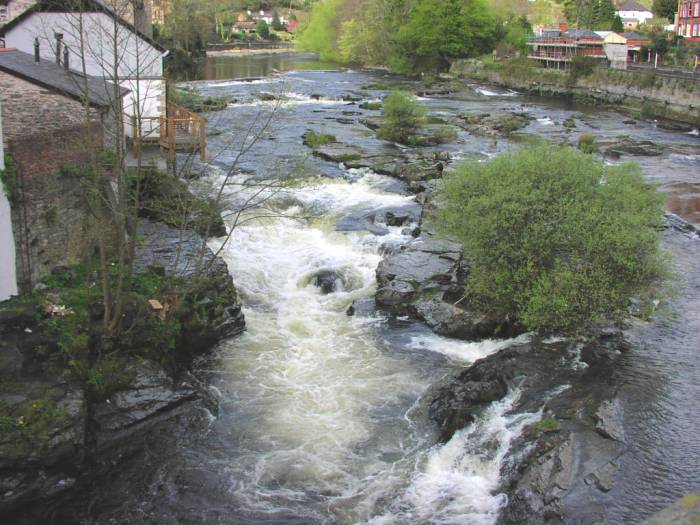 River Dee |
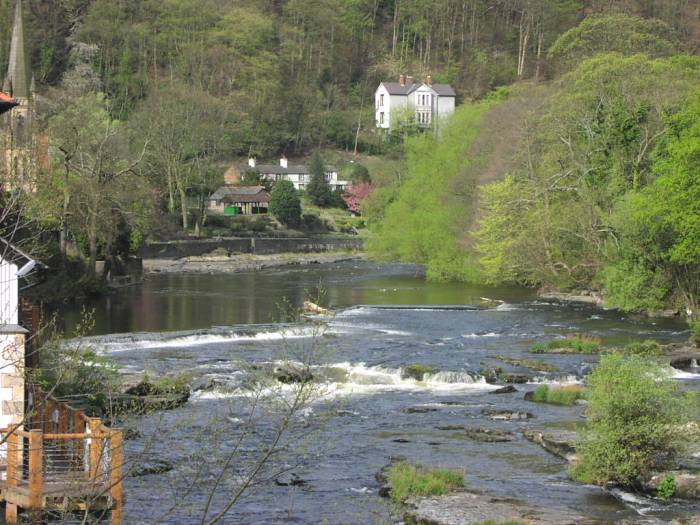 River Dee in middle of town |
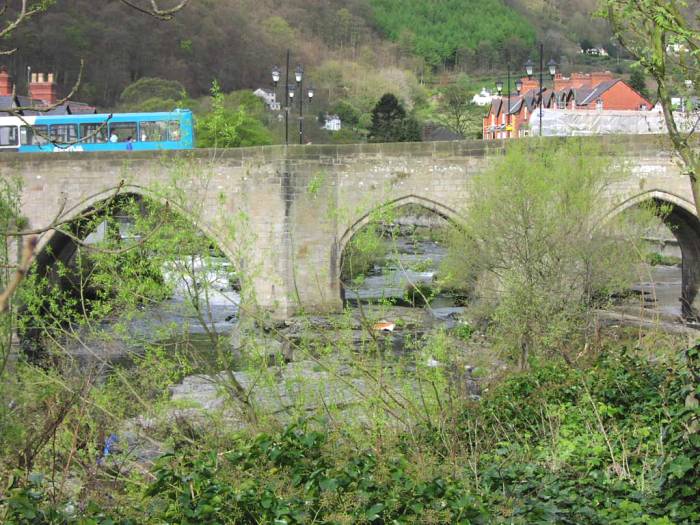 Famous Dee Bridge |
Llangollen
|
River Dee |
River Dee in middle of town |
Famous Dee Bridge |
A small town of some 3,000 people Llangollen is seeped in myth and legend. As with so many ancient Welsh towns, it takes its name from its founding Saint; Collen, a seventh century saint. Llangollen was established in the 7th Century when the monk St. Collen was instructed to find a valley by riding a horse for one day and then stop and mark out a "parish" or a place to build his hermitage or cell in the custom of the times, with a tiny church, hospice and outhouses all enclosed within a wall.
The HistoryThe famous Dee Bridge, was built by Bishop Trevor of Trevor Hall in I345. It is a scheduled ancient monument and was widened in the 1960’s to accommodate modern traffic.
Up to the 19th century Llangollen town was located south-east of the bridge around Bridge Street and Church Street, and to the north-west around the old village green, which has now disappeared. But the area is remembered by such names as 'Green Lane' and 'Green Lodge' which still exist. Nearly all of this densely populated area disappeared to allow the building of the Railway.
Llangollen became important because of its prominent position on the main London to Holyhead coaching road which was improved by Thomas Telford from 1815 and continued for some 15 years. The Canal was also constructed and combined to bring considerable immigration into Llangollen during the early part of the 19th century.