|
|
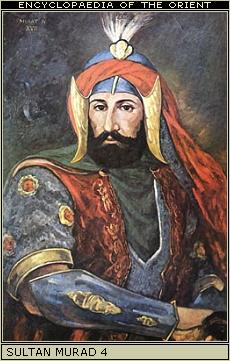
 Murad accessed the throne at the age of
11, and was in the early years of his reign dominated by his mother, grand viziers,
the Janissaries and
the sipahiyin.It was first at the age of 20, when
conflicts between the groups, principally the sipahiyin and the viziers
threatened to overthrow the stability of the empire, that he acted. He put
down the rebellion, and took full control over the empire by himself.In general the empire was weakened by
corruption, poor state finances and popular discontent with the central
government. Murad was able to get rid of some of the worst examples of
corruption when he suppressed the sipahi, and he was also able to bring
stability into the state finances.Murad was a man of strong will and
temperament. He did not pay much attention to Muslim law, Sharia,
and he was the first ever sultan to have the highest Muslim
dignitary executed.
Murad accessed the throne at the age of
11, and was in the early years of his reign dominated by his mother, grand viziers,
the Janissaries and
the sipahiyin.It was first at the age of 20, when
conflicts between the groups, principally the sipahiyin and the viziers
threatened to overthrow the stability of the empire, that he acted. He put
down the rebellion, and took full control over the empire by himself.In general the empire was weakened by
corruption, poor state finances and popular discontent with the central
government. Murad was able to get rid of some of the worst examples of
corruption when he suppressed the sipahi, and he was also able to bring
stability into the state finances.Murad was a man of strong will and
temperament. He did not pay much attention to Muslim law, Sharia,
and he was the first ever sultan to have the highest Muslim
dignitary executed.
BIOGRAPHY
1612 July 27: Born in Istanbul.
1623: Murad becomes sultan at the age of 11, and for the first years
his mother Kösem is the regent in place of her son. She governs together
with several grand viziers, but effective rule is in the hands of the
sipahiyin and the Janissaries.
— At his accession, Murad inherits a war against Persia,
and he sets out to recapture lost territories.
1632: Sipahi leaders invade the palace and demands that the grand
vizier and 16 other high officials are executed. Murad does not accept this,
and puts down the rebellion in a bloody manner. All the ones active, as well
as all suspected, were executed. Moreover, he closed down the public
institutions for the soldiers, the coffee shops and wine shops.
1638: Baghdad is
recaptured from Persia.
1639: Peace is signed with Persia.
1640 February 8: Dies from injuries caused by his addiction to
alcohol.